
Living Without Them…
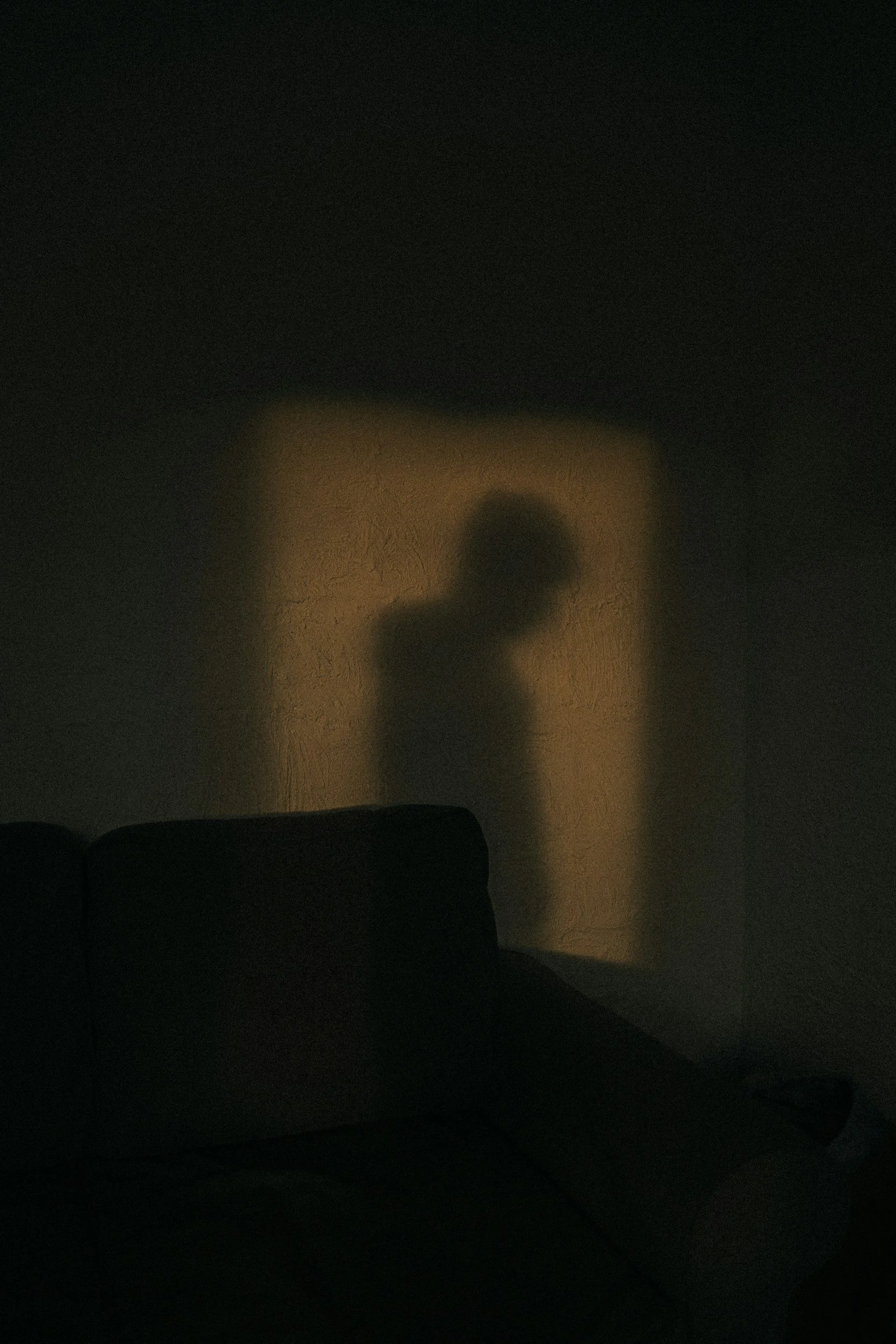
I wish someone had told me that grief isn't something you get over.
It's something you learn to live with... And some days, it's surprisingly gentle.
Other days, it takes your breath away so quickly that you can barely stand.
A reflection on grief...
Grief is one of the most human experiences there is, and yet it is the one we are least prepared for. It does not occur in a logical manner. It does not follow a specific schedule. It does not care if you have things to do or people to see. It simply appears, sometimes discreetly, sometimes all at once, and suddenly the world seems foreign to you, as if someone had changed the lighting in your life.
The strange thing about grief is that it is not loud. It is a kind of unease that underlies everything else. You feel it in your body long before your mind can find the words to describe it. Your breathing changes. Your chest tightens. Your shoulders slump. Even the simplest tasks become difficult. You wake up, you move, you talk, you work, but something inside you has changed; you are sensitive, fragile.
Grief changes you in ways you cannot explain to those who have not experienced it.
It is not just sadness. It is not just missing someone.
It's the moment when you wake up and, for two seconds, everything seems normal... until the memory hits you like a sledgehammer.
It's the way your breath catches in your throat at the most unexpected moments.
It's that silent, intimate, invisible pain that lurks behind everything you do.
No one tells you how lonely grief can be, even when you're surrounded by people.
You can laugh, talk, work, teach, do whatever you need to do, and yet part of you feels miles away from your own life
I wish someone had told me that grief isn't something you get over.
It's something you learn to live with.
And some days, it's surprisingly gentle.
Other days, it takes your breath away so quickly that you can barely stand.
La vérité la plus difficile à accepter : le chagrin ne veut pas être résolu. Il veut être observé.
We live in a world that rushes grief:
‘Stay strong.’... ‘Keep busy.’... ‘You'll feel better soon.’ "
But grief doesn't respond to pressure. It responds to honesty. When you finally accept it, even for a few minutes, something softens. Not everything... Not all the weight, but something. Maybe your breathing becomes a little deeper. Maybe your shoulders relax. Maybe the tears that never came finally flow. Or maybe no tears flow, but you feel a slight change, a small release inside.
That's the grief going away.

You don't get over grieving, you learn to live with it.
And in doing so, something inside us begins to breathe again.🤍
Living with grief: My Story

I am being transparent here because that is what I want my brand to represent: honesty, humanity, and not hiding the parts of ourselves that are difficult to name.
When I lost my parents, I didn't feel what I thought grief should feel like. I wasn't crying, I wasn't breaking down, I was numb. Completely numb. And that numbness terrified me.
I remember getting angry with myself because I couldn't cry, as if the absence of tears meant the absence of love. I thought that not feeling anything meant that I didn't care enough, or that there was something wrong with me. But the truth is, numbness is grief. It's the body's way of protecting you when the pain is too much to bear all at once.
What I didn't understand at the time was that grief doesn't manifest itself in an orderly fashion. It doesn't follow the rules we imagine. Sometimes it comes out as tears, sometimes as anger, sometimes as silence, and sometimes as a kind of emotional blockage that makes it feel like someone has paused your entire inner world. Numbness isn't a lack of feelings, it's an excess of feelings, all piling up at once, with nowhere to go.

I lost my father a year and a half after my mother, and I had the same reactions, but this time they were a little more intense. I was angrier at the world for what had happened. I was angry at everybody for continuing as normal, even though my life had lost its sense of normality.
At the beginning of my career as a yoga teacher, I was naturally drawn to teaching how to endure discomfort.
I think it was because I was learning how to do it myself.
Over time, I have come to understand that grief requires us to accept everything that comes our way, even when it is uncomfortable or confusing. And that, in a way, is the essence of yoga. It is not about the postures or flexibility, but the willingness to accept what we would rather avoid. To stay with ourselves in moments we don't fully understand.
Yoga has taught me that nothing within us should be forced. Not our breathing, not our emotions, not the time needed to heal. It has taught me that staying with discomfort is not a weakness, but a strength, a calm and steady strength that grows each time we choose not to run away from reality.
That's why I'm sharing this. Because grief doesn't manifest itself in the same way for everyone. You don't have to break down dramatically to be grieving. You don't have to cry on cue. Your process is valid even if it seems chaotic, slow, or invisible to others.
Sometimes, being human means allowing ourselves to accept what we don't yet have words for.
And sometimes, yoga is simply the space that allows us to do that...
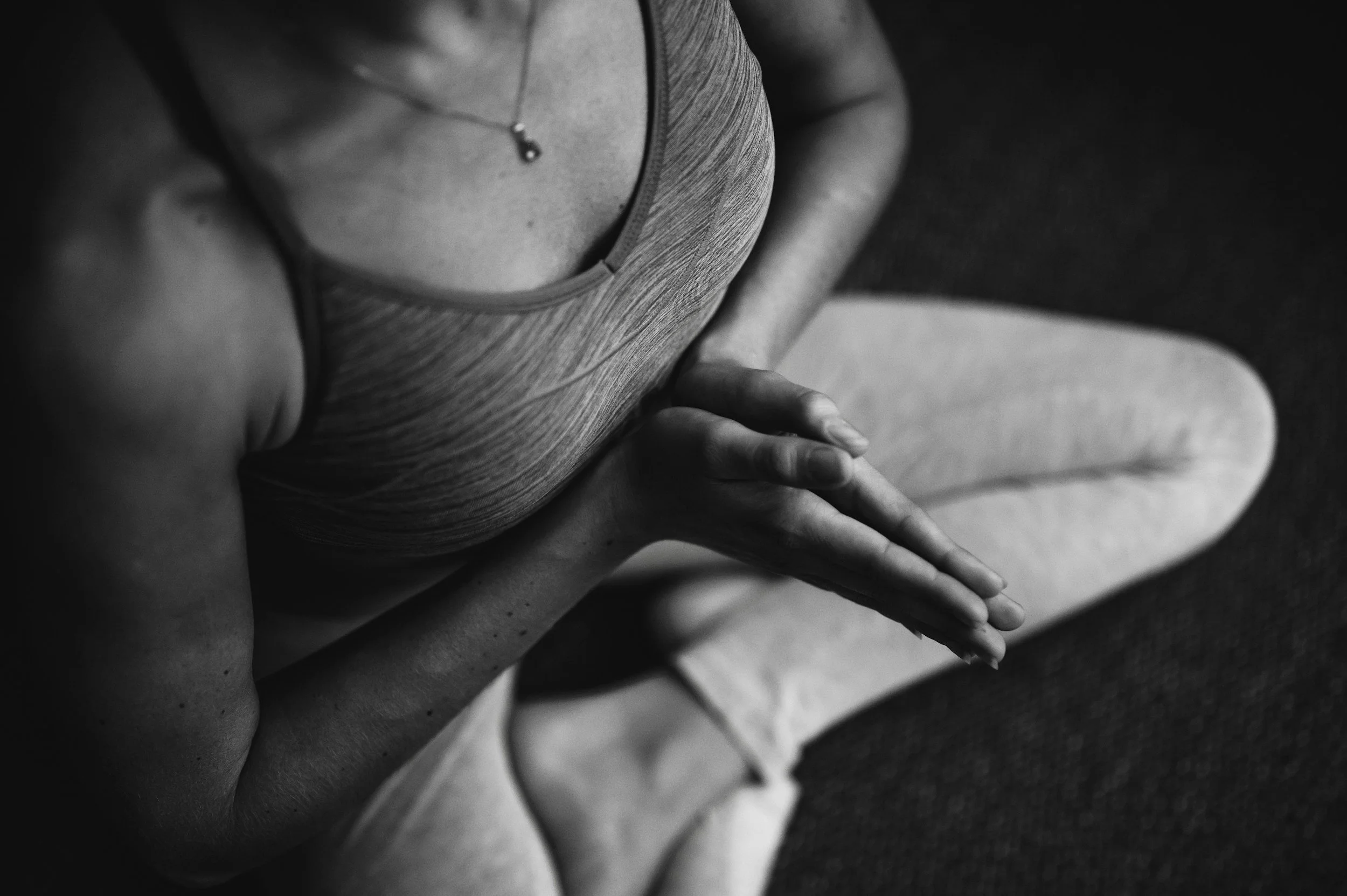
Le chagrin ne nous brise pas toujours, parfois il nous redirige
The loss of my mum dramatically changed the course of my life.
We were close, and she had always encouraged my career as a solicitor.
But after she died, I couldn't find my way back to who I was before.
So I left the career I had started to build in the UK and moved to France, not because I had a plan, but because I needed space to become someone else.
Yoga, in its essence, teaches an essential skill:
The ability to stay with what makes us uncomfortable.
On the mat, it seems simple:
a posture that trembles the body a breath that tightens, a mind that wants to run away. And instead of running away, we learn to stay. To observe. To breathe through what is difficult without giving up.
Grief is the same lesson, but stripped of gentleness and choice.
It confronts us with sensations we never asked for, emotions we would do anything to escape. There is no posture to adjust, no gentle exit. Just the raw experience of being human.
But what we practise in yoga becomes a quiet form of resilience. Not to repair grief, transcend it or “move on”, but to remain present within ourselves, to inhabit our bodies even when they tremble, to continue breathing even when breathing seems impossible.
This is the true work of yoga:
The courage to stay with what is real, even when it hurts.
There is no timetable for grief, and nothing you feel is abnormal.
Some days, you will function normally. Other days, you won't. Some days, you won't feel anything at all. That doesn't mean you're broken, it just means you're human. Loss changes us in ways we don't choose, and it takes time for our bodies and minds to understand what has been taken from us. If you are reading this while trying to make sense of your own grief, I want you to know this: you are not behind, you are not failing, and you are not alone. You are going through an immense ordeal. And the time it takes you to get through it will be the time you need.
If any part of this article resonated with you, please feel free to share your own experience in the comments, whether it's a story, a thought, or simply a 🤍.
Sometimes, even a few words can remind someone else that they are not alone.
